

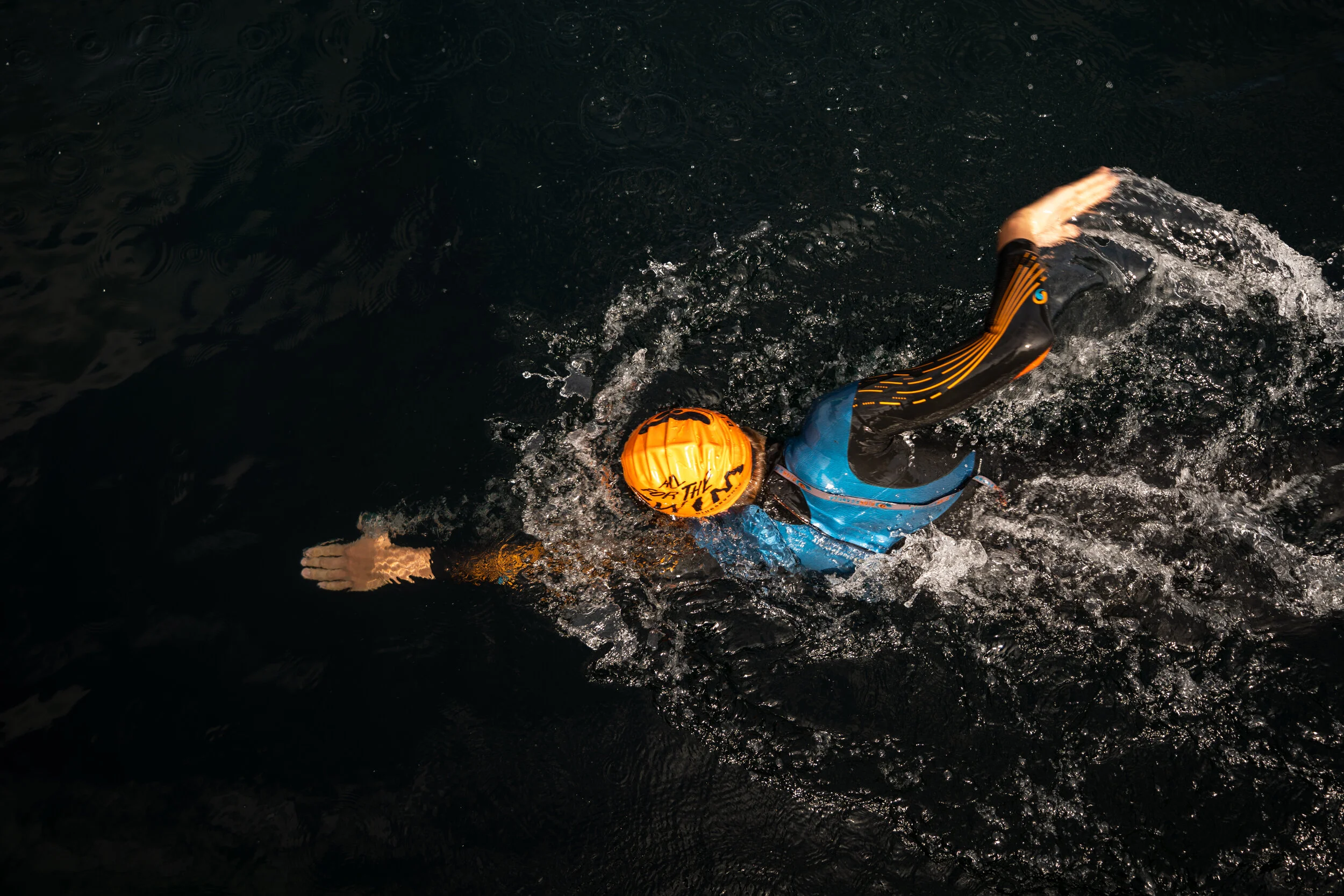
Critical Swim Speed (CSS) is swimming’s equivalent of Critical Power — the pace you can sustain aerobically without accumulating fatigue. It’s calculated from just two maximal time trials: a 400m and a 200m, performed on the same day with full recovery in between.
CSS is the anchor for all swim training zones and the target pace for threshold swim sets. Knowing yours means every session has a number attached to it — not just a feeling.
| Training zone | % of CSS | Pace / 100m |
|---|---|---|
| Z1 — RecoveryEasy aerobic, technique focus | <85% | |
| Z2 — EnduranceBase aerobic volume | 85–92% | |
| Z3 — TempoThreshold development | 93–100% | |
| Z4 — CSSCritical swim speed — threshold | 100–103% | |
| Z5 — VO2maxHigh intensity intervals | >105% |
CSS-based training is some of the most effective swim development work available — but it needs to be sequenced correctly within your overall triathlon or open water programme. Our coaches will use your CSS to structure threshold sets, aerobic volume and race-pace work so your swim is genuinely a strength come race day.
Talk to a coachNo obligation — just a conversation about where you are and where you want to get to.
Model: CSS = (400m − 200m) / (T200 − T400). Wakayoshi et al. (1992) Eur J Appl Physiol 64(2).